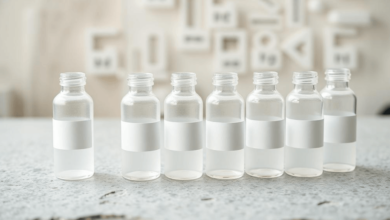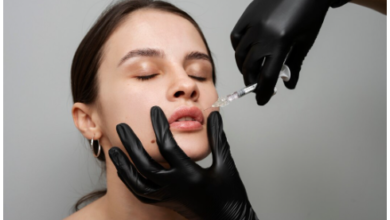
I’m not going to spend six paragraphs telling you not to inject a peptide you bought off a website with “not for human consumption” printed in tiny gray letters at the bottom. If you’re reading this, you’ve probably already decided what you’re doing, or you’re close to it. My job here isn’t to talk you out of anything. It’s to make sure you know exactly where the ground shifted under you in early 2026, and where it’s still solid.
Two dates matter. March 3 and March 31. Together they add up to more than thirty federal enforcement actions in a single month, and one phrase, “for research use only,” got called out by name and told it doesn’t do what people thought it did. If you’ve been buying immune peptides based on the idea that a disclaimer on a product page keeps you or the seller out of trouble, that idea just took a direct hit. Let’s talk about what actually protects you now.
The real risk isn’t the law. It’s what’s in the vial.
Here’s the thing nobody selling you peptides wants to say out loud: legal and safe are two completely different questions, and the industry has spent years letting people confuse them.
The clearest proof is the FDA’s own glutathione case. Glutathione is a legal molecule. Nobody disputes that. But when it got compounded from dietary-grade powder instead of pharmaceutical-grade material, the result was a documented cluster of patient harm and lab-confirmed excessive endotoxin in the injectable product [4]. That’s not a story about a banned substance. That’s a story about a sourcing failure that hurt real people who thought they were doing something routine.
Sit with that for a second. A perfectly legal compound, badly sourced and badly compounded, hurt people. Meanwhile a “research use only” vial can be 100% legal to list for sale and tell you absolutely nothing about whether it’s sterile, correctly dosed, or even the compound the label claims. A legal listing is not a safety certificate. It never was. Treat every claim of legality and every claim of purity as two separate things you need to verify separately, because sellers count on you not doing that.
What actually changed in March 2026
On March 3, the FDA sent warning letters to 30 telehealth companies over compounded GLP-1 marketing that implied their products were equivalent to FDA-approved drugs [1]. That was about weight-loss drugs, not immune peptides, but pay attention to what the FDA actually objected to. It wasn’t the compounding itself. Compounding under a prescription is a recognized, legitimate pathway. The problem was the marketing crossing a line into claiming an unapproved compounded product was the same as an approved one. Marketing was the trigger, not the molecule. Keep that distinction in your head every time you read a product page.
Then, on March 31, the FDA sent warning letters to several research-peptide sellers, Gram Peptides among them, and said plainly that slapping “research use only” on a product doesn’t shield it from regulation if the surrounding marketing is describing what it does in a human body [2]. That disclaimer was the legal floor an entire tier of this market was built on. It just cracked, in writing, from the regulator itself. If a seller’s whole pitch has always leaned on that phrase, understand that the phrase stopped meaning what they told you it meant.
The honest floor: where each route actually stands
If you strip away the marketing, there are really three lanes, and they’re not equal.
Prescription plus licensed compounding pharmacy. This is the sturdiest ground available for immune peptides that aren’t approved finished drugs. It operates inside the FDA’s own 503A/503B framework, with one caveat that any honest provider should say to your face: compounded drugs are not FDA-approved, so the agency isn’t reviewing their safety, effectiveness, or quality before they reach you [3]. That’s not a hidden trapdoor, it’s just the deal. Your protection here comes from a clinician looking at you specifically and a licensed pharmacy standing behind the product, not from a government stamp of approval that doesn’t exist for compounded drugs.
Off-label use of an approved drug. Legal, common, and fine when a licensed clinician makes that call. The catch: almost none of the immune peptides people are actually asking about are approved finished drugs here in the first place. Thymosin alpha-1 comes closest, since the synthetic version (thymalfasin) is approved as a drug in more than 35 countries, but it isn’t broadly approved for general immune use in the US [5]. So this lane, clean as it is, doesn’t have much room in it for this category.
Research-chemical powders, bought and injected on your own. This is the lane under active pressure right now. The March 31 letters made the FDA’s position explicit: sell or market something for people to inject, and it becomes, in their framing, an unapproved new drug, disclaimer or not [2]. That doesn’t mean enforcement lands on every seller tomorrow. It means the legal ground you’re standing on there is measurably shakier than it was a year ago, and you should factor that into how much trust you put in any single supplier, any single batch, any single “trust me” from a website.
The compounds themselves come with their own baggage, separate from the law
Even setting the legal question aside, a couple of these molecules carry real considerations worth knowing before you decide anything.
Thymosin alpha-1 has the most actual trial data behind it of anything in this category, but the trial data has gotten more sobering, not less, over time. The large TESTS trial tested it in 1,089 adults with sepsis and found no clear mortality benefit, 23.4% versus 24.1%, hazard ratio 0.99 [6]. That’s not a legal issue, it’s a “this may not do what the marketing implies” issue, and it’s worth knowing before you build expectations around it.
LL-37 is a different kind of flag. It can act as an autoantigen, and it’s linked to autoimmune conditions like psoriasis and lupus at the biological level [7]. That’s exactly the kind of risk profile where having a clinician actually looking at your history matters more than usual, not because the law requires it, but because your immune system doesn’t care what the label says.
If you want the safer version of this, here’s what it looks like
I’m not telling you to stop. I’m telling you that if the goal is doing this with less risk, the structure matters more than the molecule. A physician-supervised telehealth setup gives you three things a research-chemical website structurally cannot: someone reviewing your actual health picture, a prescription that puts a real clinician’s judgment between you and the syringe, and a licensed 503A pharmacy compounding the product instead of an unregulated lab filling vials in bulk.
FormBlends is one example built that way: a licensed physician reviews your profile, writes a prescription when it’s appropriate, and the compounding happens at licensed 503A pharmacies rather than wherever a “research use only” supplier sources their powder. It’s not on the market because it claims FDA approval for the compound, because compounded drugs don’t get that [3]. It’s on more solid ground because the prescription-and-pharmacy structure is the pathway that survived 2026 scrutiny, not the disclaimer that didn’t. HealthRX follows that same supervised structure, a second option built on the same reasoning. Neither one is a product you buy off a page here, this is just where the accountable structure currently lives if you go looking for it.
The bottom line
Two enforcement dates. More than thirty actions. One disclaimer that regulators said, on the record, doesn’t do the job people thought it did. If you remember one thing, remember that the “research use only” floor cracked on March 31, 2026, and the model that never depended on that floor, prescription plus licensed pharmacy, is the one still standing. Legality still isn’t safety either way, so whatever lane you’re in, the sourcing and the sterility questions don’t disappear just because the paperwork checks out.
Questions people actually ask
Are immune-support peptides legal in 2026? It comes down to how you’re getting them, not what they’re called. Prescribed, compounded through a licensed pharmacy, you’re inside the recognized 503A/503B framework. Bought as a “research use only” powder and injected yourself, you’re in a gray zone that got noticeably grayer this year, because the FDA said in writing on March 31, 2026 that the label doesn’t exempt a product being marketed for human use.
Does “for research use only” actually protect the person buying it? No, and that’s the whole story of 2026. The FDA’s March 31 letters to research-peptide sellers said the disclaimer doesn’t shield a product when the marketing around it describes what it does in a body. Once something’s being sold for people to inject, the FDA treats it as an unapproved new drug regardless of the label. That phrase was never a shield for you, and now it’s on record that it isn’t much of one for the seller either.
Why should I care about the March 3 GLP-1 letters if I’m not using weight-loss drugs? Because of the reasoning behind them, not the specific drugs named. The FDA wasn’t objecting to compounding, that’s a legitimate pathway. It was objecting to marketing that made an unapproved compounded product sound the same as an FDA-approved one. That same logic applies to how you should read any immune peptide product page: the seller’s claims are the thing to scrutinize, not just the molecule.
If something’s legal to buy, does that mean it’s safe to put in my body? No, and this is the one worth burning into memory. The FDA’s glutathione warning documented real patient harm from injectable glutathione compounded with dietary-grade powder, lab-confirmed excessive endotoxin included, even though glutathione itself is completely legal. A legal listing tells you nothing about sterility, dose accuracy, or whether the vial contains what it says. Ask those questions separately from the legal question, every time.
Is any immune peptide actually an approved drug here? Not really, and that matters. Most immune peptides aren’t approved finished drugs in the US, which is why “off-label use of an approved drug” barely applies in this category. Thymosin alpha-1 gets closest, approved as thymalfasin in more than 35 countries, but not broadly approved for general immune use domestically.
What’s the sturdiest route if I want to lower my risk without stopping entirely? A clinician evaluation, a prescription, and a licensed 503A compounding pharmacy filling it. That combination sits on the pathway that held up through 2026 enforcement, not the disclaimer-dependent one that didn’t. FormBlends runs on that structure, and HealthRX operates as a second option built the same way.
Are these peptides actually safe?
Depends heavily on which peptide, what dose, and where it came from. Thymosin alpha-1 has decades of use abroad with a reasonable track record. Most research-grade peptides sold online have close to zero human safety data behind them. Purity, sterility, and dosing accuracy matter a lot, and those are precisely the things an unregulated supplier can’t guarantee you.
Does any of this actually work, or is it mostly marketing?
Genuinely varies by peptide. Thymosin alpha-1 has real trial data behind its immune effects, which is part of why it’s an approved drug elsewhere. Most other peptides marketed for immune support are riding on early-stage or animal research, nothing close to that. Calling the whole category proven would be dishonest. Calling all of it fake would be dishonest too.
What are people actually using for immune support?
Thymosin alpha-1 gets the most serious clinical attention, studied in things like hepatitis and certain cancers. BPC-157 comes up a lot for its broader effects on tissue repair, though the human evidence specifically for immune function is thin. Thymosin beta-4 fragments circulate in these conversations too. Don’t treat any of them as interchangeable, and know their legal footing shifts depending on where you are and how you’re sourcing them.
Where’s the most accountable place to actually get these?
A physician-supervised compounding pharmacy setup, where a licensed clinician actually looks at your situation before anything gets prescribed, and the pharmacy answers to state and federal oversight. FormBlends operates there. Buying from a research-chemical website skips every layer of that accountability, and given how much the regulatory ground has moved since 2024, that’s not a small thing to skip.
References
- FDA warned 30 telehealth companies over illegally marketed compounded GLP-1 products, citing claims implying equivalence to FDA-approved drugs. FDA press announcement, March 3, 2026. https://www.fda.gov/news-events/press-announcements/fda-warns-30-telehealth-companies-against-illegal-marketing-compounded-glp-1s
- FDA warning letters to research-peptide sellers (Gram Peptides and others); a “research use only” label does not exempt products marketed for human use. FDA, dated March 31, 2026. https://www.fda.gov/inspections-compliance-enforcement-and-criminal-investigations/warning-letters/gram-peptides-721806-03312026
- FDA on human drug compounding: compounded drugs are not FDA-approved, so the FDA does not review their safety, effectiveness, or quality before marketing; overview of compounding under sections 503A and 503B. U.S. FDA.
- FDA warning to compounders not to use a dietary-grade glutathione powder to compound sterile injectable drugs, after a cluster of patient adverse events and laboratory-confirmed excessive endotoxin. U.S. FDA, 2019.
- Comprehensive review of thymosin alpha-1: mechanism and approval in more than 35 countries as thymalfasin (Zadaxin); not broadly approved for general immune use in the US. World Journal of Virology, 2020.
- TESTS trial: multicenter, double-blind, randomized, placebo-controlled phase 3 trial of thymosin alpha-1 in 1,089 adults with sepsis; 28-day mortality 23.4% versus 24.1% (hazard ratio 0.99); no clear benefit. BMJ, 2025.
- Antimicrobial peptides of the cathelicidin family, focus on LL-37: host-cell cytotoxicity and autoantigen/autoimmune (psoriasis, lupus) associations. International Journal of Molecular Sciences, 2025.
Written by Gia Abadi, health explainer. Reviewing the trials and labels directly. Last reviewed May 2026.
This article is informational. A licensed provider is the right source for personal medical advice.